
Solar
Reverse-Cycle Heating: The Cheapest Way to Warm a Victorian Winter
The aircon on your wall is probably the cheapest heater in your house. Here is why reverse-cycle wins the winter maths in Victoria.
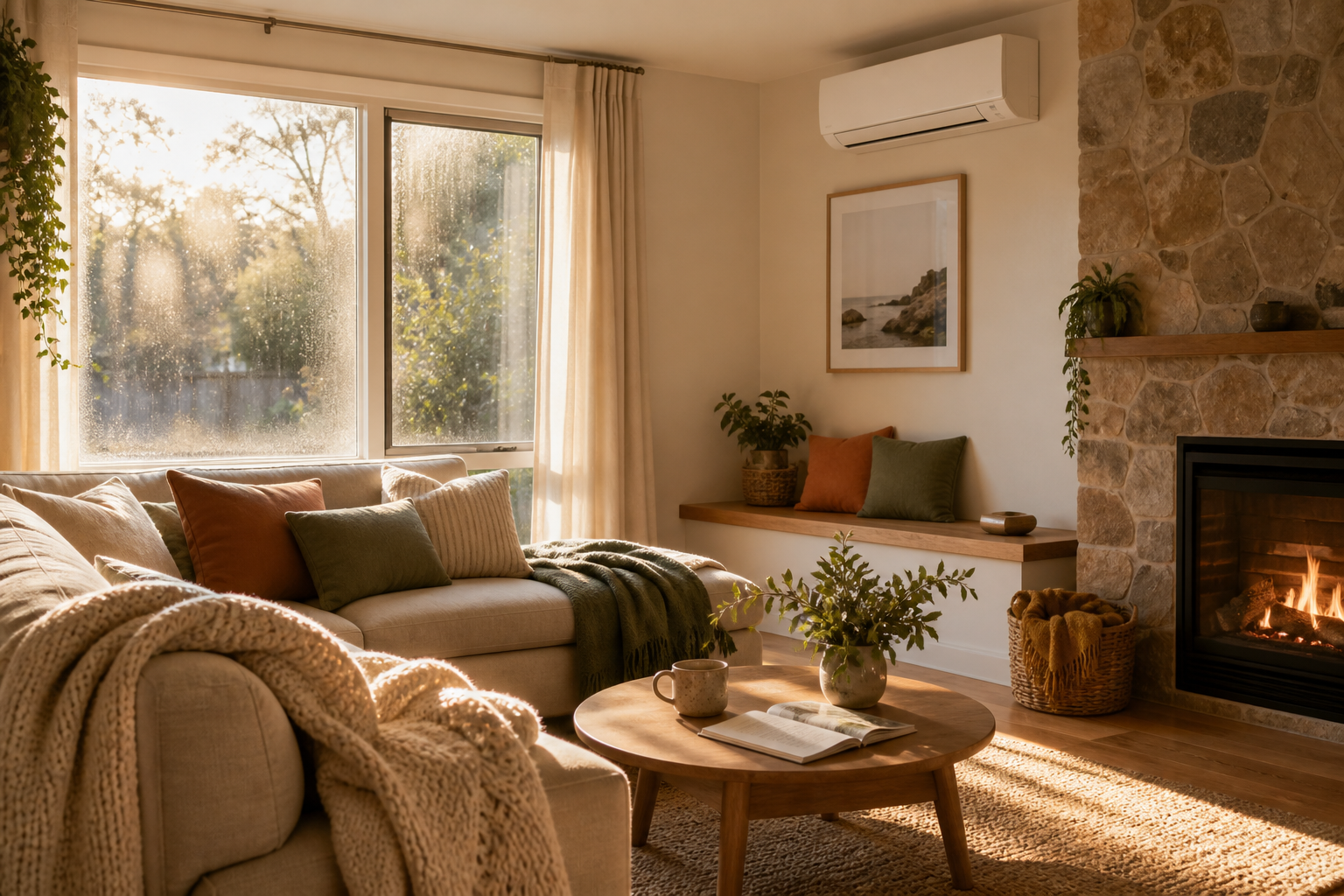
Here is a fact that still surprises plenty of homeowners: the air conditioner mounted on your living room wall is very likely the cheapest way to heat that room. Not the gas ducted system, not the plug-in electric heater glowing in the corner — the aircon. Understanding why comes down to one simple idea, and it changes how you think about winter bills.
Moving heat beats making heat
A plug-in electric heater converts electricity directly into warmth: one kilowatt in, one kilowatt of heat out. A reverse-cycle air conditioner works differently — it uses a refrigeration circuit to move existing heat from the outside air into your home. Because it is transferring warmth rather than generating it, a quality unit delivers three to five kilowatts of heat for every kilowatt of electricity it draws. Engineers call this the coefficient of performance; on your bill it simply means the same warmth for roughly a quarter of the running cost of a resistive heater.
Yes, it works on frosty mornings
The common objection is that there is no heat in cold air to move. In fact there is usable thermal energy in air well below freezing, and modern units keep extracting it efficiently through a typical Victorian winter. On a two-degree Melbourne morning a good reverse-cycle system still comfortably outperforms any electric alternative, and quality units manage their own defrost cycles without you noticing more than a brief pause.
How it stacks up against gas
For years gas heating was the default in Victoria, but the equation has shifted. Gas prices have climbed steadily, older ducted gas systems lose warmth through ageing ducts, and daily supply charges keep hitting your bill even in summer. Households that heat with reverse-cycle and disconnect gas entirely often save twice — once on running costs and again on the standing charge. If you have rooftop solar, the case gets better still: sunny winter afternoons can power your heating directly, bringing the marginal cost of a warm house close to zero.
Getting the most from it
A few habits sharpen the savings. Set the temperature between 18 and 20 degrees — every degree higher adds roughly ten per cent to running costs. Use the timer to warm rooms before you wake rather than blasting the unit on arrival. Keep the filters clean, because a clogged filter forces the unit to work harder for the same warmth. And close doors to unused rooms so you are only heating the space you live in.
If your winter setup still relies on gas or portable heaters, it is worth pricing the switch. Between the running-cost savings and available efficiency incentives, reverse-cycle heating usually pays for itself faster than people expect — and we can run the numbers for your home before you commit to anything.