
Solar
Aircon Servicing: What a Professional Actually Checks
A real service is much more than a filter rinse. Here is what happens during a professional visit, and why it pays for itself.
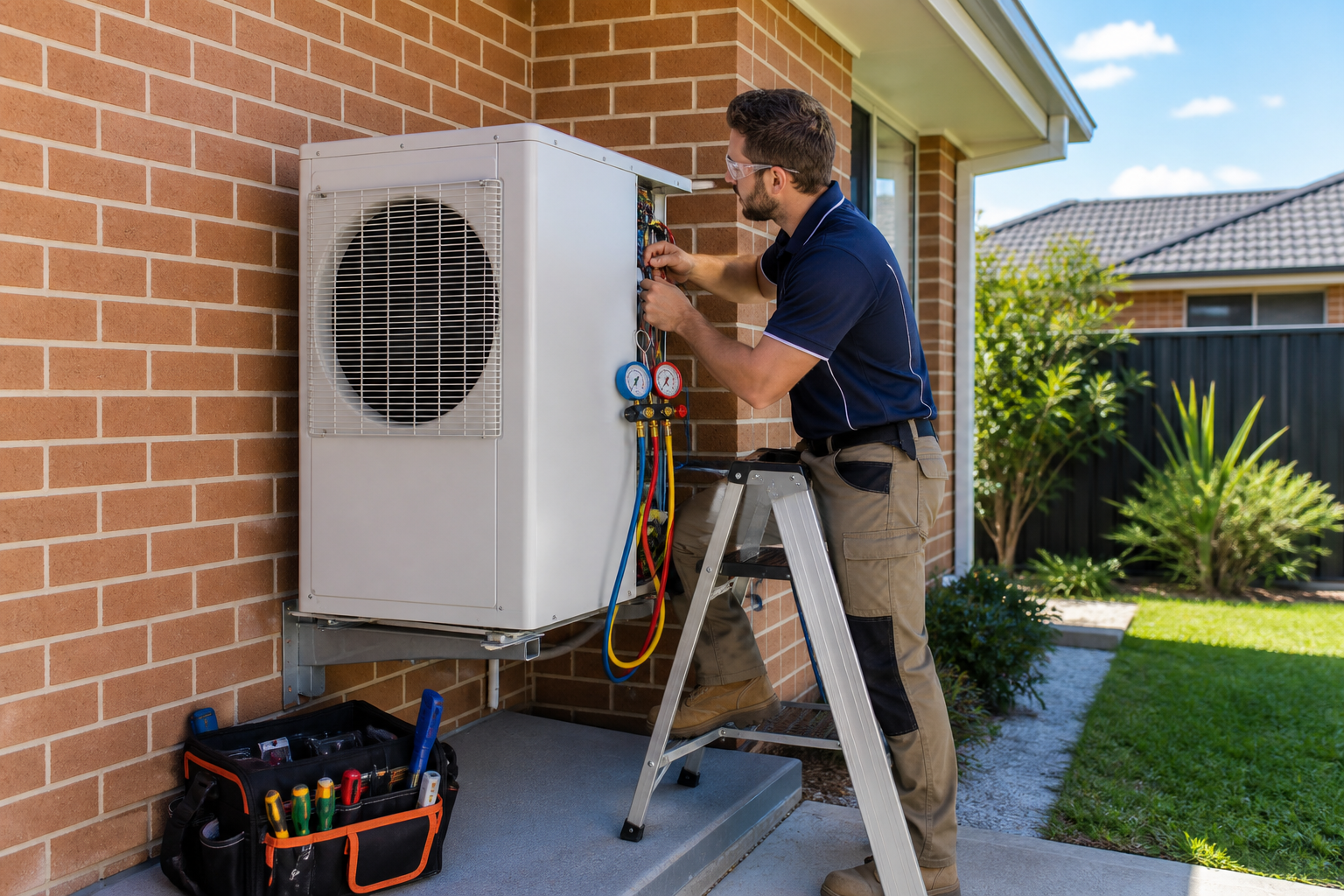
Plenty of homeowners assume an aircon service is just someone rinsing the filters — something you could do yourself in ten minutes. Filter cleaning is part of it, but a genuine professional service is closer to a full health check: electrical, mechanical, refrigerant and airflow, inside and out. Knowing what should happen during a service helps you judge whether you are getting real value or a quick wipe-down.
Inside the indoor unit
The visit starts where the air does. The technician removes and washes the filters, but then goes further: inspecting the evaporator coil for dust and mould, checking the fan barrel for build-up that quietly steals airflow, and sanitising surfaces where biofilm grows. The condensate drain gets flushed and tested, because a blocked drain is the number one cause of water dripping down walls in summer. Louvres and sensors are checked so the unit reads room temperature accurately rather than short-cycling.
Outside at the condenser
The outdoor unit does the hard work and cops the weather doing it. A professional clears leaves and cobwebs from the cabinet, straightens crushed fins and cleans the condenser coil so heat can escape properly — a dirty coil can quietly add ten to fifteen per cent to your running costs. Mounting brackets and rubber feet are checked too, because a unit that has worked loose transmits vibration and noise into the house.
The checks you cannot do yourself
This is where a licensed technician earns the fee. Refrigerant pressures are measured against manufacturer specifications, revealing slow leaks long before they show up as poor cooling. Electrical connections are tightened and tested, capacitors are checked for drift, and the compressor's current draw is compared with its rated figures — a rising draw is an early warning of trouble ahead. Finally the system is run in both heating and cooling modes, with the temperature difference across the coil measured to confirm it is performing to spec, not just switching on.
What regular servicing actually saves
The economics are straightforward. A neglected system loses efficiency a little at a time, so you pay more each summer for less comfort without noticing the drift. Small faults found at a service — a weak capacitor, a minor leak, a strained fan motor — cost little to fix; the same faults left alone become compressor failures that cost more than the original unit. Manufacturers know this, which is why many warranties expect documented maintenance.
How often is enough?
For most Victorian homes, once a year is right, ideally in spring before the system faces summer's heavy lifting. Homes with pets, nearby building work or heavy year-round use benefit from a six-monthly schedule. Between visits, your job is simple: keep the filters clean and the outdoor unit clear. Leave the gauges, meters and refrigerant to us — that is what a real service is for.